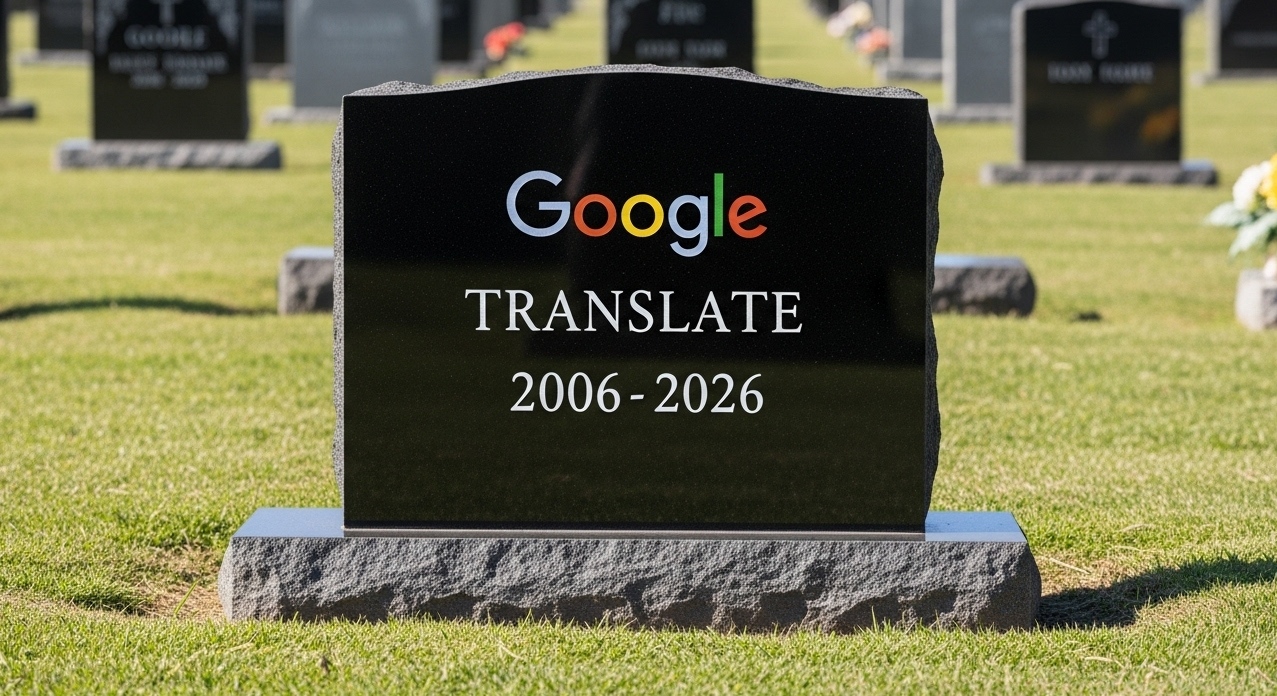
For a long time, the Google Translate widget was the go-to solution for making websites multilingual. You copied a snippet of code, pasted it into your header, and suddenly your site had a dropdown menu with 100+ languages. SEO problems? Nobody really thought about it.
But those days are over. Google actually discontinued the widget for new commercial users back in 2019. If you are still using it (or a similar JavaScript-only overlay), you are likely hurting your business more than you are helping it.
Here is why the old “widget” approach is dead, and why it is terrible for SEO.
The technical problem: why google can’t “see” your translations
To understand why the old widget fails, you have to understand how search engines work. They “crawl” your website by following links and reading the HTML code of your pages.
1. No unique URLs
When you use a simple JavaScript translation widget, the URL in the browser bar stays the same.
- Original:
example.com/about - Translated (Spanish):
example.com/about
To Google, this is justone page. It doesn’t know the Spanish version exists because there is no separate address for it. If there is no URL, there is no ranking.
2. Client-side rendering (invisible content)
The old widget works by swapping text in the browserafterthe page loads. The server sends the English text, and then a script changes it to Spanish on the user’s screen.
Googlebot (the crawler) mostly looks at the initial HTML response from the server. It sees the English text. It rarely “clicks” buttons or executes complex scripts to see the translated versions. So, your Spanish content is effectively invisible to search engines.
3. Missing hreflang tags
Hreflang tags are the industry standard for telling Google, “Hey, this is the Spanish version of this page.” The old widget doesn’t generate these. Without them, search engines don’t know which language to show to users in different countries.
4. Untranslated meta data
Even if a user manually translates the visible text, the “meta tags” (like the Page Title and Meta Description that show up in search results) usually stay in the original language. A Spanish speaker searching for your product will see an English title in the results. They simply won’t click it.
The solution: SEO-first translation
You don’t need to rebuild your entire site to fix this. You just need a tool that understands modern SEO.
We built our translation tool to replace the old, broken widget model. It installs with the same ease (justone line of code), but it works completely differently under the hood.
How we do it differently:
- Automatic hreflang tags:We automatically inject the correct tags so Google knows exactly which languages you support.
- Translated metadata:We translate your Page Titles and Meta Descriptions, so you show up in foreign search results in the right language.
- Static indexing:We make sure search engines can see and index your translated content, just like they do your original pages.
- Full control:Unlike the old widget where you were stuck with whatever Google decided “hello” meant, our tool lets youedit any translation. If the AI gets a distinct industry term wrong, you can fix it manually.
The old Google Translate widget was a cool novelty in 2010. Today, it is an SEO trap. If you are serious about international growth, you need a solution that puts SEO first.
Make your website multilingual
Break language barriers and connect with audiences worldwide. Expand your reach, grow your business, and go global today.
No credit card required