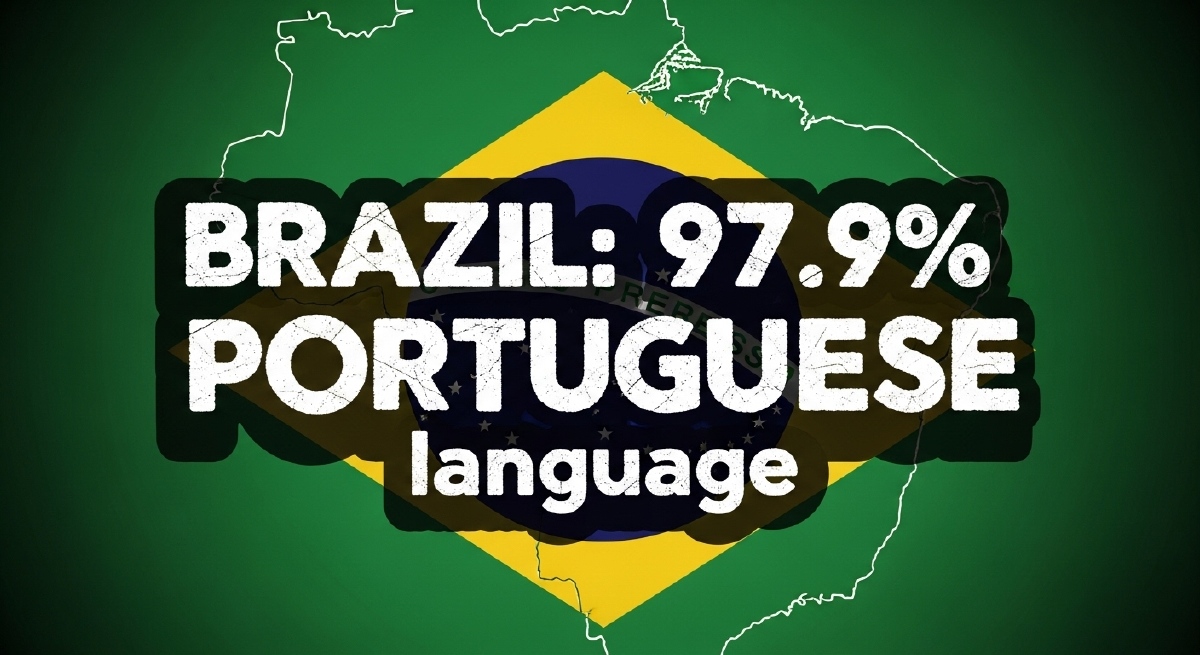
Brazil isn’t just another market – it’s the largest economy in Latin America and the sixth largest in the world. With over 215 million people and a rapidly growing digital economy, ignoring Brazil means leaving massive revenue on the table. But here’s the thing: if you want to succeed there, your website absolutely must speak Portuguese.
The Brazilian market opportunity
Brazil’s ecommerce market is exploding. According to Ebit Nielsen, Brazilian ecommerce revenue reached over $40 billion USD in recent years and continues growing at double-digit rates annually. That’s bigger than many European countries combined.
The Brazilian middle class has grown dramatically over the past two decades. Millions of consumers now have purchasing power and internet access. They’re shopping online for everything from electronics to fashion to software subscriptions. Mobile commerce is particularly huge – Brazil has one of the highest smartphone penetration rates in Latin America.
But here’s what trips up most international businesses: Brazilians overwhelmingly prefer to shop in Portuguese. Not just prefer – they insist on it.
Language barriers are deal breakers
Only about 5% of Brazilians speak English with any level of proficiency. That’s roughly 10 million people out of 215 million. Even among the educated urban population, English skills are limited compared to European countries or Asian markets like Singapore.
This isn’t like selling in the Netherlands or Sweden where most people speak excellent English. In Brazil, if your website is in English, you’re excluding 95% of potential customers right from the start.
A survey by the Brazilian Association of Electronic Commerce found that 73% of Brazilian consumers won’t complete a purchase on a website that isn’t in Portuguese. They’ll add items to cart, see the checkout in English, and abandon. Every single time.
Portuguese in Brazil is unique
Here’s a mistake many businesses make: they translate their site to European Portuguese and think they’re done. Wrong.
Brazilian Portuguese and European Portuguese are significantly different. It’s not just accent – it’s vocabulary, grammar, and cultural context. The differences are comparable to American English versus British English, but even more pronounced.
Brazilian consumers immediately notice when content is in European Portuguese. It feels foreign, awkward, and wrong. It signals that you don’t actually understand their market. Some words have completely different meanings. Some phrases that work in Portugal sound bizarre or even offensive in Brazil.
If you’re translating for Brazil, you need Brazilian Portuguese specifically. Don’t cut corners here.
Trust and credibility in the Brazilian context
Brazilian consumers are cautious about online shopping, especially with international companies. Credit card fraud is a real concern. Shipping delays and import taxes are common frustrations. Trust is everything.
When your website speaks Brazilian Portuguese properly, it immediately builds credibility. It shows you’re serious about the Brazilian market. It suggests you understand local payment methods (like boleto bancário and PIX), shipping logistics, and customer service expectations.
A study by PayPal and Ipsos found that 60% of Brazilian online shoppers prefer to buy from local websites or international sites localized for Brazil. Language is the first and most obvious sign of localization.
SEO advantages in Brazil
Google.br dominates search in Brazil. When Brazilian users search, they search in Portuguese. If your website content isn’t in Portuguese, you’re essentially invisible in Brazilian search results.
Brazilian ecommerce sites like Mercado Livre, Magazine Luiza, and Americanas dominate because they have massive amounts of Portuguese content indexed by Google. To compete, you need Portuguese content too.
Even if you’re selling a niche product with little local competition, you still need Portuguese to rank. Google’s algorithms prioritize content that matches the searcher’s language. Your perfectly optimized English pages won’t show up for Portuguese searches.
Beyond Google, Brazilians use local search engines and platforms like Buscapé (a price comparison site) that only work with Portuguese content.
Payment and checkout considerations
Here’s where many international sites fail: they translate the homepage and product pages but leave checkout in English. Fatal mistake.
Checkout is where purchase anxiety peaks. Customers are entering credit card numbers, addresses, and personal information. Any confusion or uncertainty kills the sale. If your checkout process isn’t crystal clear in Portuguese, people bounce.
Brazilian payment methods are also unique. Boleto bancário is still incredibly popular – it’s essentially a printable payment slip that can be paid at banks or lottery shops. PIX, Brazil’s instant payment system, has exploded since 2020. Credit card installment payments (parcelamento) are expected for any purchase over about $50.
If your payment page doesn’t explain these options in Portuguese, customers won’t trust the process and won’t convert.
Customer service expectations
Brazilians expect customer service in Portuguese. Not just email – they want WhatsApp support. Brazil is the second-largest WhatsApp market globally after India.
A study by Zendesk found that 88% of Brazilian consumers expect customer service in their native language. When they have questions, they’ll message you on WhatsApp or email. If you respond in English, most will give up and buy elsewhere.
Even automated responses need to be in Portuguese. FAQ pages, help centers, chatbots – all of it. You don’t necessarily need 24/7 live Portuguese support from day one, but you need clear Portuguese information and reasonable response times.
Mobile-first market
Over 70% of Brazilian internet users access the web primarily through mobile devices. Many Brazilians, especially in lower income brackets, don’t own computers – smartphones are their only internet access.
Mobile users have even less patience for language barriers. On a small screen, struggling through English content is nearly impossible. If your mobile experience isn’t in Portuguese, you’re losing the majority of potential Brazilian customers.
Cultural context matters
Direct translation isn’t enough. Brazilian culture has specific communication styles, humor, and references that differ from North American or European markets.
Brazilians generally prefer warmer, more personal communication. Corporate-speak and overly formal language can feel cold. Product descriptions should be engaging and relatable, not just technically accurate.
Holidays and shopping seasons are different too. Brazil’s biggest shopping event is Black Friday, which has become massive there. But they also have their own dates like Dia das Mães (Mother’s Day in May, different from the US) and Dia do Consumidor (Consumer Day). Your marketing calendar needs to reflect Brazilian dates, in Portuguese.
The competitive landscape
Major international brands that succeed in Brazil – Amazon, Apple, Netflix, Spotify – all offer full Brazilian Portuguese localization. They didn’t try to save money with English-only sites.
If your competitors are offering Portuguese and you’re not, you’ve already lost. If none of your competitors have entered Brazil yet, properly localized Portuguese gives you a huge first-mover advantage.
Brazilian consumers are brand loyal once you earn their trust. The companies that invested early in proper localization now dominate their categories.
Implementation doesn’t have to be hard
The good news: translating your website for Brazil is easier than ever. Modern translation tools can handle the technical SEO automatically – hreflang tags pointing to pt-BR, localized meta descriptions, proper URL structures.
The key is investing in quality Brazilian Portuguese translation, not just running everything through Google Translate. For core pages like homepage, product descriptions, and checkout flow, professional human translation is worth it. For less critical content, machine translation with human editing works fine.
Make sure your tool lets you edit translations. Even good automated translation needs tweaking for cultural fit and brand voice.
The bottom line
Brazil represents one of the largest untapped markets for international ecommerce. But you can’t succeed there with an English website. Portuguese isn’t optional – it’s mandatory.
The barriers to entry are real but manageable: Brazilian Portuguese localization, local payment methods, mobile optimization, and customer service. Language is the foundation everything else builds on.
Companies that invest in proper Brazilian Portuguese translation see dramatic results. Conversion rates double or triple. Customer acquisition costs drop. Brand trust builds faster.
If you’re serious about international expansion and not selling in Brazil yet, Portuguese localization should be your next move. The market is massive, growing fast, and hungry for international products – as long as you speak their language.
Make your website multilingual
Break language barriers and connect with audiences worldwide. Expand your reach, grow your business, and go global today.
No credit card required