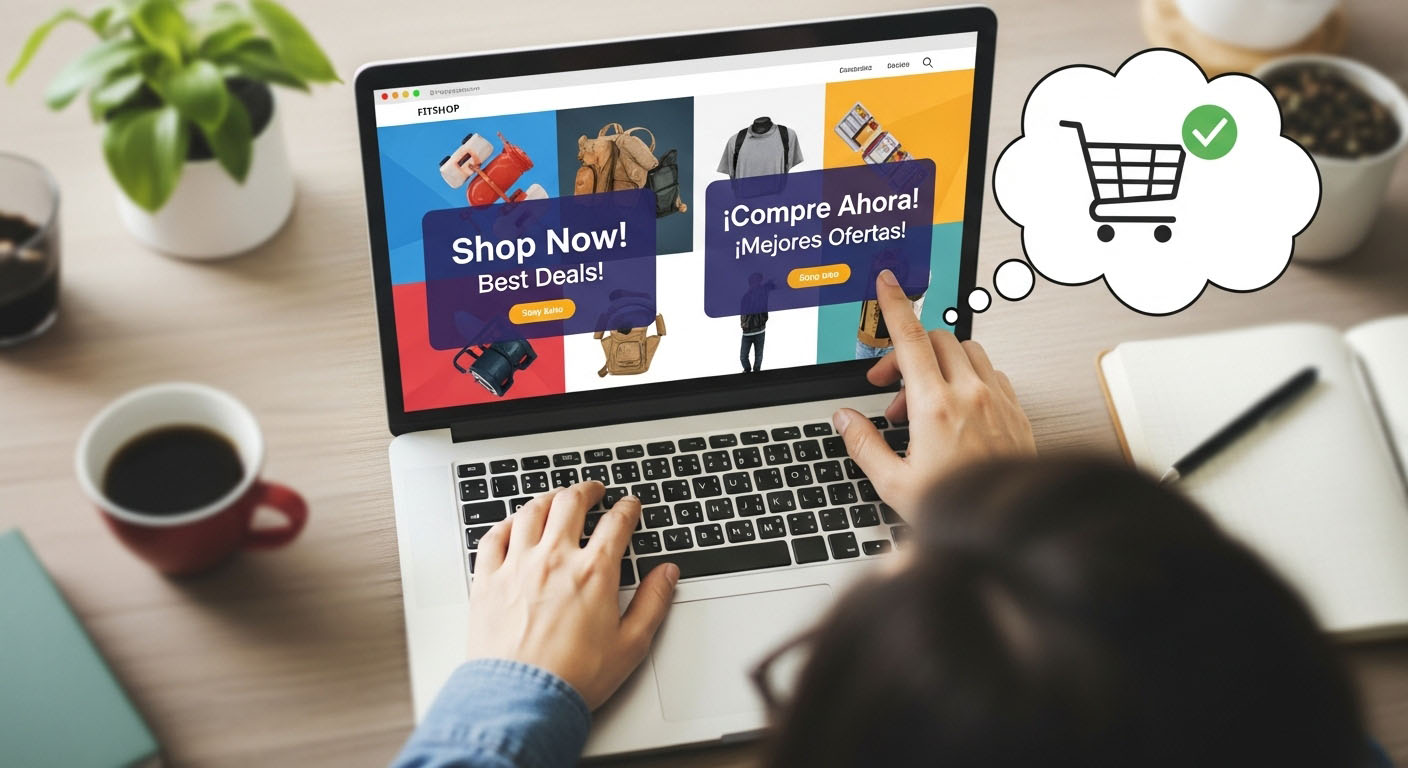
When you visit a website in a language you don’t fully understand, something feels off. Even if you can translate it in your head, there’s a barrier between you and that “Buy now” or other button. It isn’t just psychology – it’s backed by real data showing that language has a massive impact on trust, credibility, and ultimately conversions.
The trust factor in ecommerce
Trust is everything in online shopping. You can’t touch the product, you can’t meet the seller face to face, and you’re about to hand over your credit card details to a website. In this scenario, every small detail matters.
When a website speaks your native language, it sends a clear message: “we care about you.” It shows the business took time to understand your market and invested in reaching you properly. On the flip side, a poorly translated site or one that forces you to struggle through a foreign language screams “you are not our priority.”
Research from Common Sense Advisory found that 76% of online shoppers prefer to buy products with information in their native language. More striking – 40% will never buy from websites in other languages. That’s nearly half of your potential customers walking away before they even see your product.
A study by CSA Research showed that 65% of consumers prefer content in their language, even if it’s poor quality. But here’s the key insight: while any translation is better than none, quality matters for conversion. Users might browse your site with basic translation, but they need proper, accurate language to trust you with their money.
The conversion gap
The numbers tell a clear story. According to Nimdzi Insights, customers are 3 times more likely to make a purchase when information is available in their native language. Three times. That’s not a small improvement – that’s a fundamental shift in business outcomes.
Think about it from the buyer’s perspective. You’re looking at a product description in a language that’s not quite right. Maybe the translation is awkward, maybe some technical terms don’t make sense. Do you:
- Spend time trying to figure it out
- Contact customer support in a language you struggle with
- Or just find the same product on a site that speaks your language
Most people choose option three. The path of least resistance wins.
Reducing friction in the buying process
Every extra step between a customer and checkout is a chance to lose them. Language barriers create friction at every stage:
Product research– if specs and features are unclear, customers bounce
Trust signals– reviews, guarantees, and policies need to be crystal clear
Checkout process– payment and shipping info must be understood perfectly
Customer support– post-purchase questions need quick, clear answers
When all of these work smoothly in the customer’s native language, friction disappears. The buying process feels natural and safe.
The mobile factor
Mobile commerce is growing fast, and language matters even more on small screens. Users have less patience, less screen space, and less tolerance for confusion. A CSA Research report found that 87% of non-English speakers won’t buy from an English-only website when browsing on mobile.
On desktop, users might power through language issues. On mobile, they just leave. The next competitor is one tap away.
Building long-term customer relationships
First-time purchases are great, but repeat customers are the foundation of sustainable business. Language plays a huge role in retention.
When customers receive order confirmations, shipping updates, and marketing emails in their language, they feel connected to your brand. When customer service responds in their native language, problems get solved faster and satisfaction goes up.
Forrester Research found that customers who interact with brands in their preferred language have a 73% higher customer satisfaction rate. Satisfied customers come back and they tell their friends.
The competitive advantage
Here’s the reality: most businesses still don’t properly localize their websites. They either ignore international markets completely or rely on basic automatic translation that misses the mark.
This creates an opportunity. When you offer a genuinely localized experience – proper translation, local payment methods, appropriate cultural references – you stand out dramatically from competitors who don’t bother.
You don’t need to be a massive corporation to do this anymore. Modern translation tools make it possible for small businesses to compete globally. The technical barriers are gone – it’s just a matter of making the decision to do it.
Getting it right
The key to success isn’t just throwing your content through an automatic translator. Quality matters. While machine translation has improved dramatically, it still needs human oversight for anything important.
Your approach should be:
- Use professional translation for key pages (homepage, product descriptions, checkout)
- Make sure translations are editable so you can fix mistakes
- Test with native speakers before launch
- Pay attention to local customs and cultural norms
- Update your translated content when you update the original
The good news is that modern website translation tools handle the technical SEO automatically – hreflang tags, meta descriptions, canonical URLs – so you can focus on the content quality.
The bottom line
Offering your website in customer’s native languages isn’t just nice to have anymore. It’s a fundamental requirement for serious international business. The data is clear: people trust websites in their own language more, they feel more confident buying, and they become more loyal customers.
Every business wants higher conversion rates and better customer retention. Language localization delivers both. The question isn’t whether you should do it – it’s whether you can afford not to.
Your customers are telling you what they want. They’re voting with their wallets, choosing businesses that speak their language. The technology exists to give them what they want easily and affordably. The only thing left is to make it happen.
Make your website multilingual
Break language barriers and connect with audiences worldwide. Expand your reach, grow your business, and go global today.
No credit card required