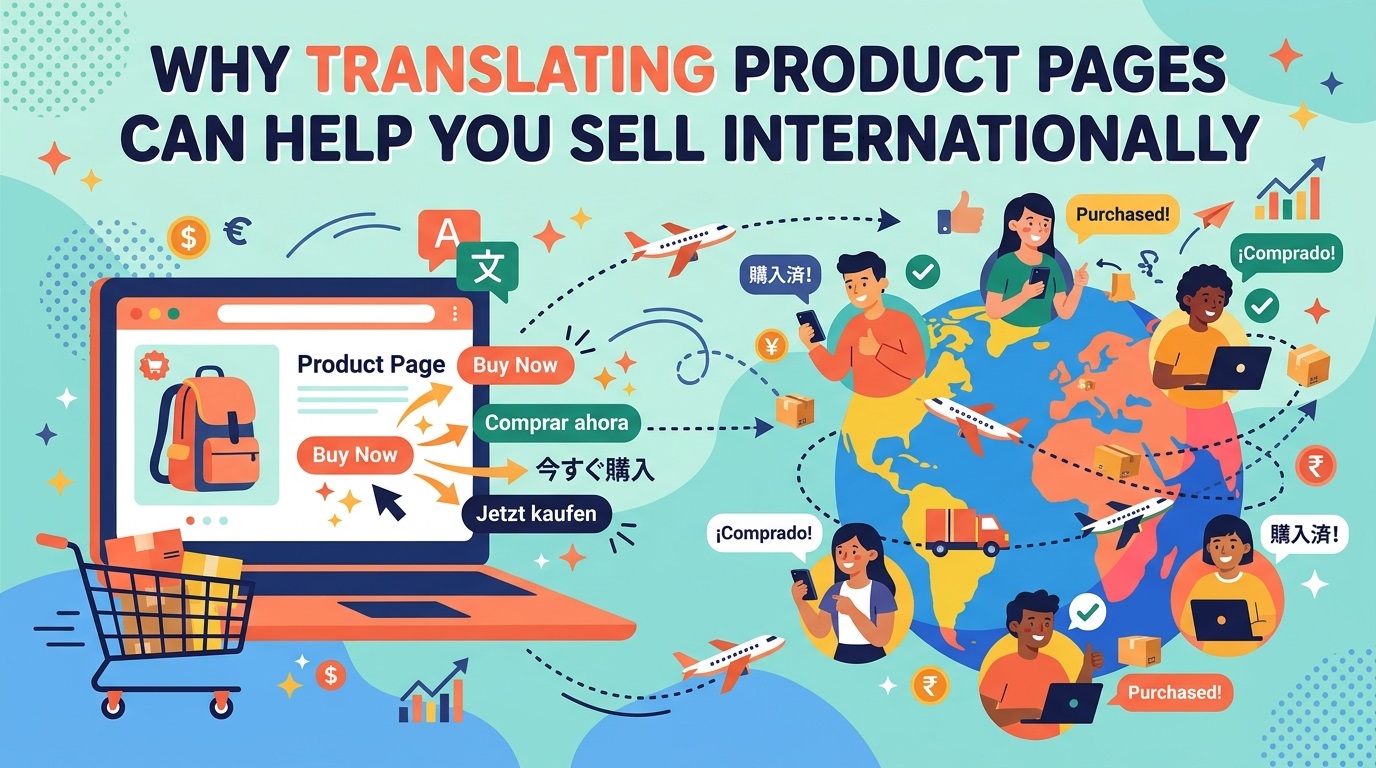
Selling products online gives your business the opportunity to reach customers far beyond your local market. With an ecommerce website, someone from another country can discover your products, visit your store, and place an order without ever visiting your physical location.
But there is one important problem: language.
Imagine a customer visiting your online store from Germany. They find a product they like, but the product description, specifications, and purchasing information are all written in English. They might understand some of it, but they may not feel confident enough to make a purchase.
Now imagine the same product page translated into German. The customer can understand what the product does, what features it offers, and why it might be useful.
This is why translating product pages is an important step for businesses that want to sell internationally.
In this article, we’ll explain why product page translation matters, how it can improve the shopping experience, and how you can translate your online store into multiple languages without spending hours doing it manually.
1. Reach customers who don’t speak your language
One of the biggest limitations of an English-only online store is that it can make your products difficult to understand for people who speak other languages.
English is widely used on the internet, but not every potential customer is comfortable shopping in English.

For example, if you sell products internationally, your potential customers might come from:
- Germany
- France
- Spain
- Italy
- Japan
- Brazil
- The Netherlands
- Poland
These customers may be interested in your products, but language barriers can make it harder for them to understand your offer.
By translating product pages into their preferred languages, you make your store accessible to a much larger audience.
Instead of limiting your business to customers who understand your original website language, you can present your products to shoppers in different markets.
The main advantage is simple: more people can understand what you sell.
2. Help customers understand your products
A product page is one of the most important parts of an ecommerce website.
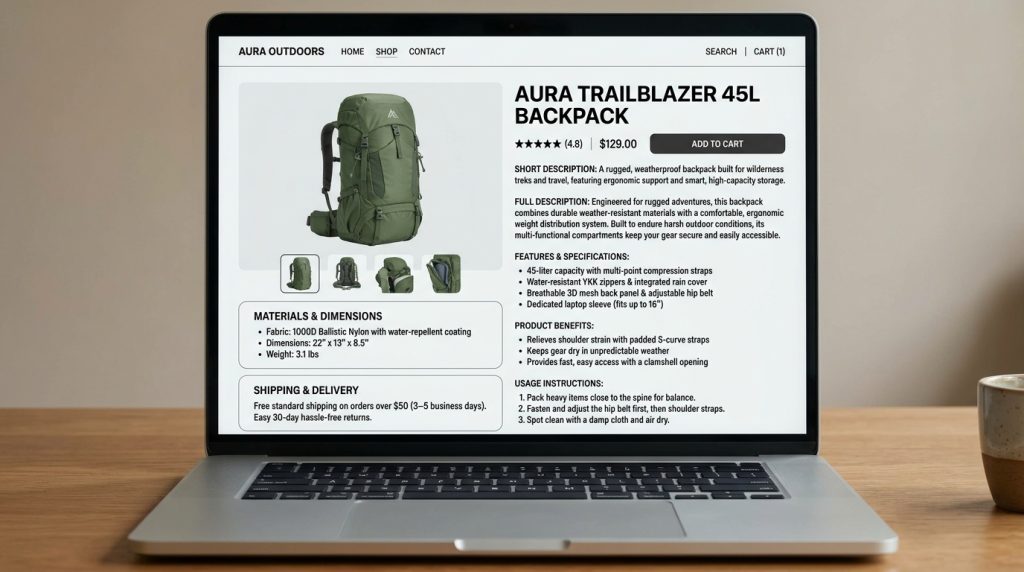
It contains the information customers need before making a purchasing decision. This usually includes:
- Product name and title
- Short product description
- Full product description
- Features and specifications
- Materials and dimensions
- Product benefits
- Usage instructions
- Shipping and delivery information
If this information is available only in one language, international visitors may struggle to understand the product.
Translating product pages helps remove this barrier.
For example, imagine selling a coffee machine. Your product description explains its capacity, available settings, cleaning instructions, and technical features.
A customer who doesn’t understand English may have difficulty comparing your product with other options.
When the description is translated into their language, the information becomes easier to understand.
This is particularly important for products with technical specifications, detailed instructions, or features that require explanation.
3. Build trust with international shoppers
Trust is an important part of online shopping.
Customers cannot physically inspect most products before purchasing them. Instead, they rely on product photos, descriptions, specifications, reviews, and other information available on your website.
When all this information is presented in a language they understand, customers can make more informed decisions.
A translated product page can help your business appear more accessible and customer-focused.
It also shows that you have considered the needs of people shopping from different countries.
Think about it from the customer’s perspective. Would you feel more comfortable purchasing an expensive electronic device if you could read its specifications and instructions in your native language?
For many shoppers, the answer is yes.
Of course, translation alone does not guarantee trust. Your store should also provide accurate product information, transparent pricing, clear shipping conditions, and accessible customer support.
4. Improve the shopping experience
A good shopping experience should make it easy for customers to find products, understand their features, and complete a purchase.
Language plays an important role in every step of this process.
If visitors need to translate every product description themselves, shopping can quickly become frustrating.
A multilingual ecommerce website makes the experience easier by allowing visitors to browse products in a language they understand.
This can include:
- Product titles and descriptions
- Product categories
- Navigation menus
- Search and filter labels
- Shopping cart information
- Checkout instructions
- Frequently asked questions
The more consistent the language experience, the easier it is for international customers to navigate your store.
Remember that translating only your homepage is not enough. Visitors often arrive directly on product pages through Google, social media, or advertisements.
Your product pages should be available in the languages you offer throughout the shopping journey.
5. Reach new customers through international SEO
Product page translation can also create new opportunities for organic search traffic.
People in different countries often search for the same products using different languages.
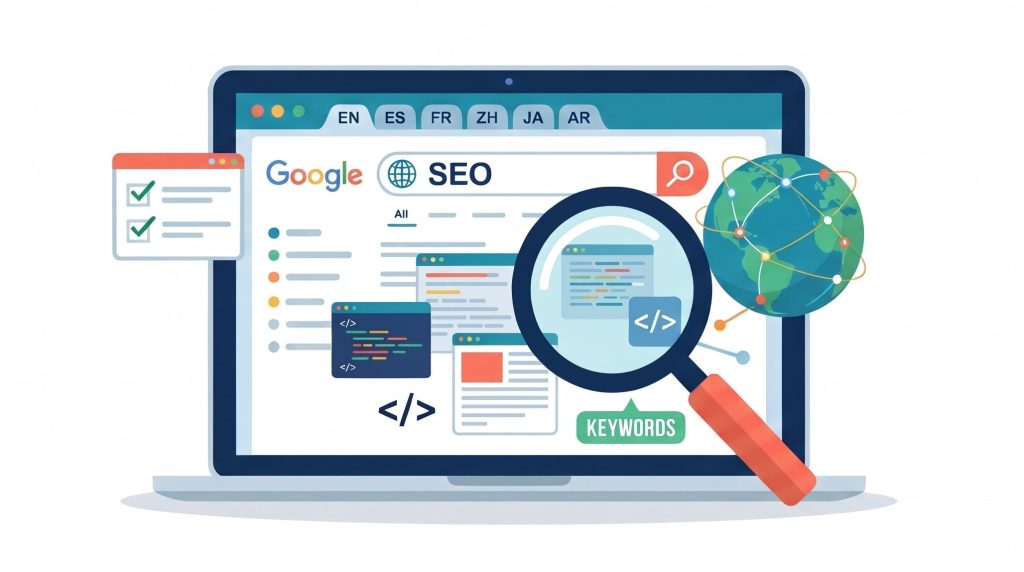
For example, someone searching for running shoes in English might use a completely different phrase when searching in French, German, or Spanish.
If your product pages are available only in English, you may miss opportunities to appear in searches performed in other languages.
By making product information available in additional languages, you can create content that is relevant to more international search queries.
You don’t need to worry about complicated technical SEO settings when using translate.js. Our service handles the technical work automatically, so your translated pages are properly configured for international search engines.
-
Automatic hreflang tags: translate.js automatically adds the appropriate hreflang tags to help Google understand the language versions of your pages and show them to the right audiences.
-
Automatic canonical tags: We handle canonical tags automatically to help search engines understand the correct URL structure of your translated pages.
-
SEO-friendly translated pages: Your translated pages are prepared for search engine indexing, helping search engines discover and understand your multilingual content.
-
No manual configuration: You don’t need to edit HTML, add SEO tags, or configure complicated technical settings. translate.js takes care of the technical SEO implementation behind the scenes.
Simply install the translate.js plugin and let our service handle the multilingual setup automatically.
No coding, no complicated SEO configuration, and no need to manage technical language settings manually.
Combining useful translated content with proper technical SEO gives your store a better foundation for international search visibility.
6. Compete with local online stores
When customers shop online, they often compare several websites before making a purchase.
If your competitors provide product information in the customer’s language and your store does not, you may be at a disadvantage.
A multilingual product page helps you compete more effectively by making your products easier to understand.
Consider a customer in France comparing two online stores.
- Store A provides product descriptions only in English.
- Store B provides product descriptions in French.
Even if both stores sell the same product, Store B offers a more accessible shopping experience for someone who prefers French.
This doesn’t mean customers will always choose the translated store. Product quality, pricing, delivery times, reputation, and customer service still matter.
However, removing unnecessary language barriers can make your business more competitive in international markets.
7. Save time with automatic product translation
If you have a large ecommerce store, manually translating every product can become a major task.
Imagine having 500 products, each with a title, short description, full description, and technical specifications.
Now imagine translating all this content into five additional languages.
The amount of work can quickly become difficult to manage.
You would need to translate thousands of individual text elements and keep them updated whenever your original product information changes if decide to do it manually.
This is where automatic website translation can make a difference.
Instead of manually translating every product page, you can use a translation plugin that automatically translates supported website content.
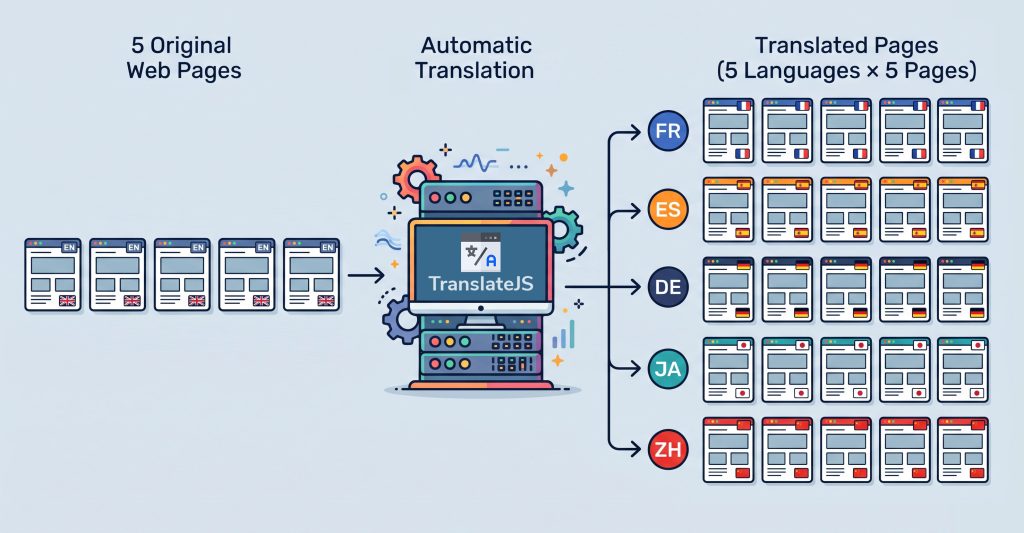
With an automatic translation solution such as translate.js, you can make your website available in multiple languages without manually creating a translation for every product.
For WooCommerce stores, this can help translate supported content such as:
- Product titles
- Product descriptions
- Short descriptions
- Product category pages
- Shop pages
- Other visible website content
This approach is particularly useful for stores with large product catalogs or businesses that frequently add new products.
Rather than spending hours translating individual pages, you can simplify the process and focus more on managing your business.
The exact translation coverage depends on the plugin, theme, and extensions used by your website. Always test important product pages and dynamic store elements after installation.
8. Why automatic translation is useful for large product catalogs
Automatic translation is not only about saving time when launching a multilingual website.
It can also make ongoing website management easier.
Online stores change constantly. You add new products, update descriptions, change specifications, and sometimes remove old items.
With a manual translation workflow, every content update may require additional translation work.
For a store available in several languages, this can become difficult to maintain.
Automatic translation can reduce this workload by handling supported content without requiring you to manually create every translated version.
For example:
Imagine you operate a WooCommerce store selling home accessories.
You have 300 products and want to make your store available in English, German, French, and Spanish.
Without automatic translation, you may need to manage separate translations for a large number of product titles and descriptions.
With an automatic website translation plugin, you can make the supported content available in these languages much more easily.
This allows you to spend less time managing translations and more time improving your products, marketing, and customer experience.
9. Make your online store multilingual without coding
You don’t need to build a separate website for every country or manually translate hundreds of product descriptions.
A WordPress translation plugin can make the process much simpler.
With translate.js, you can make your website multilingual by installing the WordPress plugin and configuring the languages you want to offer.
The translation solution then automatically translates supported website content, including product pages, descriptions, and other elements.
You don’t need to edit your theme files or write JavaScript code yourself.
The basic process is simple:
Step 1: Install the plugin
Install and activate the translate.js WordPress plugin.
Step 2: Configure your languages
Choose the languages you want to make available to your visitors and configure the language switcher.
Step 3: Let your website be translated
Visitors can select their preferred language and view supported website content in that language.
This makes it easier to provide a multilingual shopping experience without manually translating every product.
If you run a WooCommerce store with a large catalog, automatic translation can save a significant amount of time.
Final thoughts: product translation is an important step toward international growth
Selling internationally is not just about making your products available to customers in other countries. It’s also about making sure those customers can understand what you’re offering.
Translated product pages help remove language barriers, make product information easier to understand, improve accessibility, and create opportunities to reach people searching in different languages.
If you want to expand your ecommerce business, making your product pages multilingual is a practical place to start.
You don’t have to translate everything manually or spend weeks creating separate versions of your website.
With an automatic translation solution such as translate.js, you can make your website available in multiple languages with a simple WordPress plugin installation.
Ready to reach international customers?
Visittranslatejs.comand discover how easy it can be to make your website multilingual.
Frequently asked questions
Why should I translate my product pages?
Translating product pages makes it easier for international customers to understand your products, read descriptions, compare features, and make purchasing decisions. It can also help your website serve search queries in additional languages.
Does translating product descriptions help SEO?
Translated product descriptions can help your website become relevant to search queries in other languages. For the best results, use useful localized content, indexable translated URLs, appropriate hreflang annotations, and a correct canonical strategy. Translation alone does not guarantee higher rankings.
Can I automatically translate WooCommerce products?
Yes. You can use an automatic WordPress translation plugin to translate supported WooCommerce content, including product titles, descriptions, and other visible elements. Actual coverage depends on the plugin and your store configuration.
Do I need to manually translate every product?
No. Automatic website translation can reduce or eliminate the need to manually translate every supported product description. However, important product information should be reviewed to ensure accuracy.
Which languages should I add to my online store?
Choose languages based on your existing international visitors, target markets, customer demand, and shipping availability. Spanish, German, French, Italian, and Portuguese can be useful starting points for many businesses, but the best choices depend on your products and audience.
Can translating product pages increase international sales?
Translation can remove language barriers and make your products easier to understand. This may help you reach more potential customers, but sales also depend on product demand, pricing, shipping, payment options, competition, and customer trust.
Is automatic translation good enough for an ecommerce website?
Automatic translation is a practical solution for making large amounts of website content available in multiple languages. For important product specifications, legal information, warranties, and safety instructions, human review is recommended.
Can I translate my online store without coding?
Yes. A WordPress translation plugin such as translate.js allows you to make supported website content available in multiple languages without manually editing code. Install the plugin, configure your languages, and let the translation solution handle supported content.
Make your website multilingual
Break language barriers and connect with audiences worldwide. Expand your reach, grow your business, and go global today.
No credit card required