Many business owners think that if they want to sell products in France, Germany, and Japan, they need to buy a separate domain for each country. They buy.fr, .de, and.jpdomains, assuming this is the only way Google will take them seriously in those regions.
This approach is actually a bad idea for most companies. By splitting your website into multiple domains, you can multiple problems. Instead of having one actual website, you have three separated ones with different content, what is hard to update and manage.
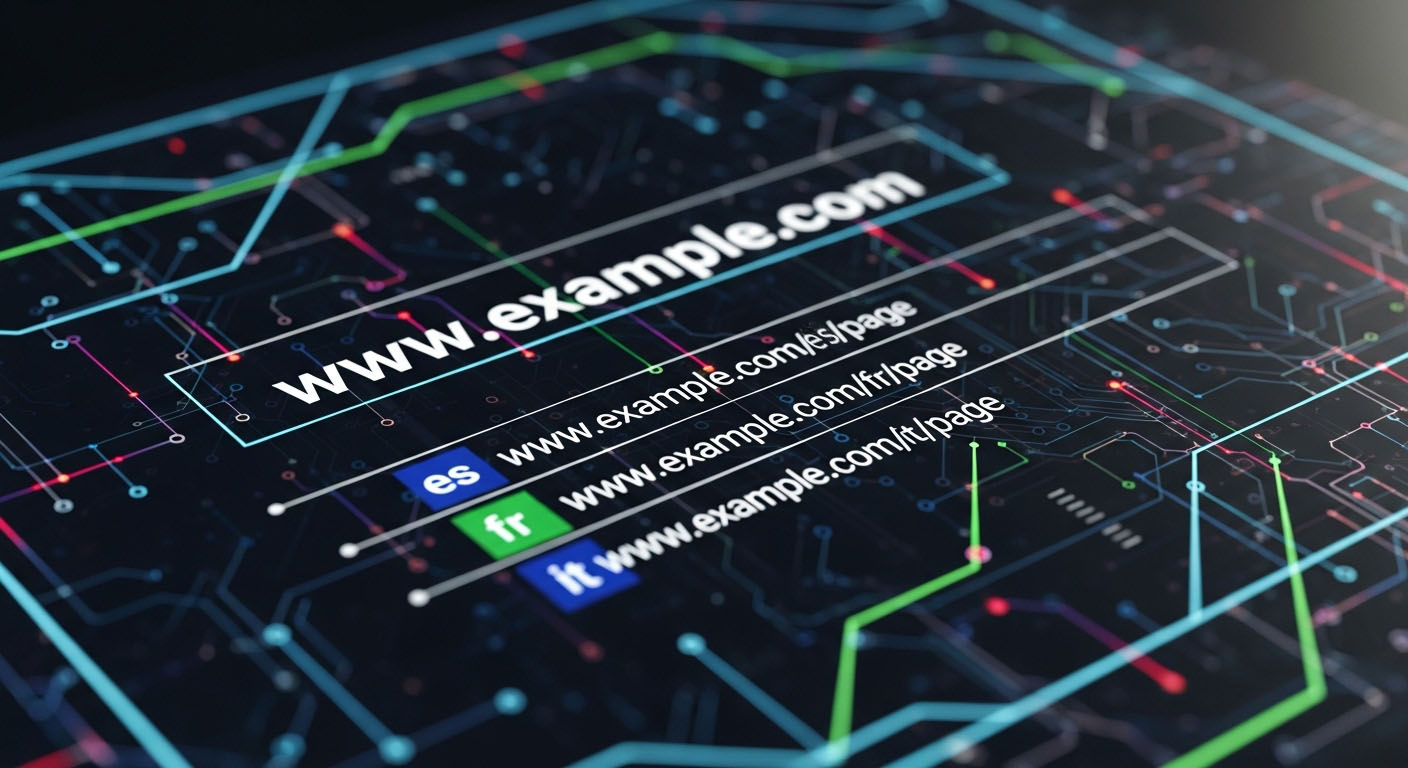
The much smarter strategy is to use subdirectories on a single main domain. Here is why this works and exactly how to do it.
The power of a single domain
Think of your website domain authority as a bucket of water. Every time another website links to you, they add a drop of water to your bucket. When Google sees a full bucket, it ranks your website higher.
If you use ten different country domains, you have ten separate empty buckets. You have an enormous amount of work to do to fill all of them. But if you use subdirectories, likeexample.com/fr/andexample.com/de/, all those drops flow into one single, powerful bucket. A backlink to your French page strengthens your entire global website.
Use hreflang tags to guide Google
If you are putting all your translated content on one domain, you need a way to tell Google who should see what. If a person searches from Berlin, Google needs to know they should get the/de/page, not the/fr/page.
This is wherehreflangtags come in.
An hreflang tag is a tiny piece of code hidden in the background of your site. It simply acts like a map for search engines. It says, “Hey Google, this specific page is for German speakers in Germany.” When you implement these tags correctly, you stop competing against yourself and start dominating local search results.
Translate the metadata
A huge mistake people make is translating the main text on their page, but forgetting the meta titles and descriptions.
The meta title is the big blue link people click on in Google search results. If a user in Spain sees your website listed in English, they are probably not going to click it, no matter how good your actual product is. You have to translate the metadata so that your site looks local from the very first moment they see it on Google.
The easy way out
Setting up language subdirectories, mapping out hreflang tags, and translating metadata for thousands of pages used to take weeks of developers writing custom code.
With tools like Translate.js, this process is now fully automated. You do not need to create ten different websites or hire a technical seo expert. By adding just 1 line of code to your site, Translate.js will automatically detect the user language, generate the right subdirectories, update all the hreflang tags, and translate your meta titles instantly.
You get all the seo power of a single domain, with none of the technical headaches.
Make your website multilingual
Break language barriers and connect with audiences worldwide. Expand your reach, grow your business, and go global today.
No credit card required